Let’s be honest, it’s usually a rainy afternoon or that chaotic hour right before dinner when the playdough comes out. It’s an easy way to buy yourself 30 minutes of peace. And while grabbing a plastic tub from the shop is easy, nothing beats a fresh batch made on the stove. It’s cheap, non-toxic, and takes five minutes.
But as educators, we don’t just use playdough to keep children busy. It is actually one of the most effective learning tools we have in our centres. While children think they’re just messing around, they’re actually building foundational skills.
Here is the exact, foolproof recipe we use at Tribe, and a quick look at why it works.
The 5-Minute Tribe Recipe
This recipe creates a soft, glossy dough that doesn’t crumble or dry out like store-bought versions.
What You’ll Need
- 1 cup plain flour
- 1 cup water
- ½ cup salt
- 1 tbsp vegetable oil
- 2 tsp cream of tartar (don’t skip this – it’s what makes it smooth and stretchy)
- A few drops of food colouring
How to Make It
Step 1: Mix dry ingredients
Whisk the flour, salt, and cream of tartar together in a medium saucepan off the heat.
Step 2: Add the liquids
Stir in the water, oil, and food colouring until you have a smooth batter.
Step 3: Cook on medium
Put the pan over medium heat and stir constantly. Within 2 to 3 minutes, the mixture will suddenly clump into a solid ball and pull away from the sides of the pan. Take it off the heat immediately.
Step 4: Knead
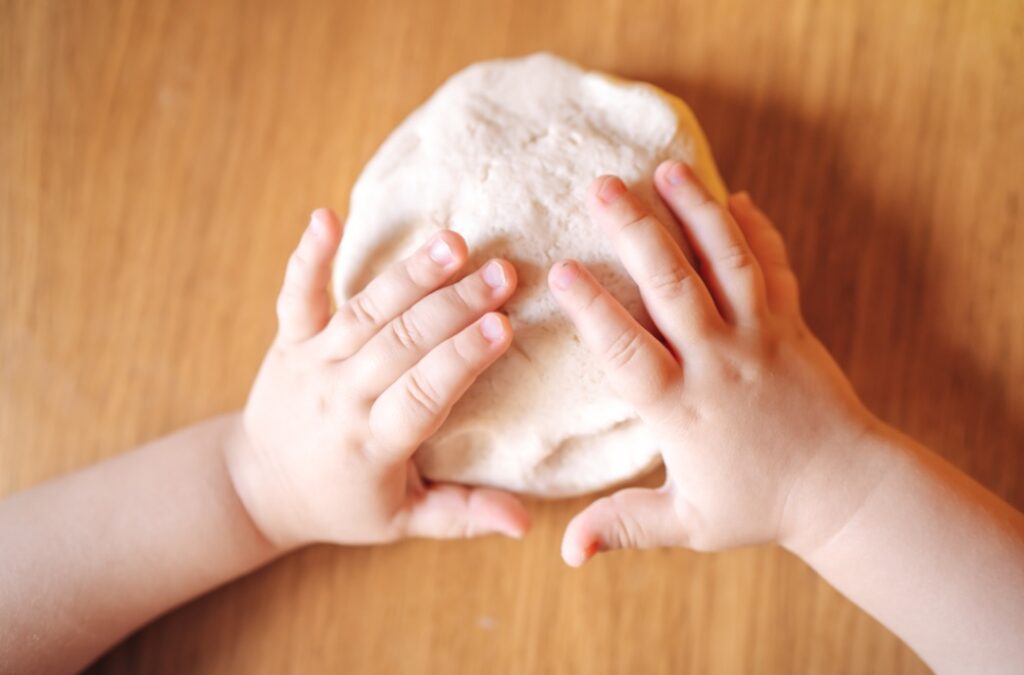
Let it cool for a minute so you don’t burn your hands, then knead the warm dough on the counter for about 60 seconds until smooth.
Storage: Once cool, pop it in an airtight container or a zip-lock bag. It will stay soft and usable for up to three months.
Troubleshooting & Variations
Even a foolproof recipe can hit a snag depending on humidity or exact flour measurements. If your batch isn’t turning out quite right, here is how to fix it fast:
Why is my playdough sticky?
If the dough feels tacky or sticks to fingers, it simply needs more dry ingredients or a little more heat. Put it back in the pan over low heat for another 30 seconds, or knead a tablespoon of flour into the dough on the counter until the stickiness disappears.
What if I don’t want to use the stove?
You can easily turn this into a no-cook recipe. Swap the cold water for boiling water. Mix the dry ingredients in a bowl, stir in the oil and colour, and then carefully pour the boiling water over the top. Stir vigorously with a spoon until it forms a dough, let it cool, and knead.
How to add a sensory upgrade?
If you want to increase the sensory complexity, add a few drops of essential oils (like lavender for calming or wild orange for focus) during the liquid mixing stage.
The Real Value of Play-Based Learning
We talk a lot about play-based learning, but what does that actually mean in practice? With something as simple as playdough, three major things are happening at once:
- Building writing muscles: Every time a child rolls, pinches, or squeezes dough, they are strengthening the tiny muscles in their hands and wrists. This is the exact physical strength they need later on to hold a pencil and learn to write.
- Sensory decompression: The physical resistance of pushing and pounding dough provides excellent sensory feedback. It’s a grounding activity that naturally helps children wind down and process big emotions after a long day. If you want to learn more, you can also explore other self-regulation activities at home to help manage big energy.
- Stealth math: Measuring out ingredients introduces concepts of volume and fractions. Watching a liquid turn into a solid ball on the stove is a practical, hands-on lesson in chemical changes.
Try Shifting to Nature Play
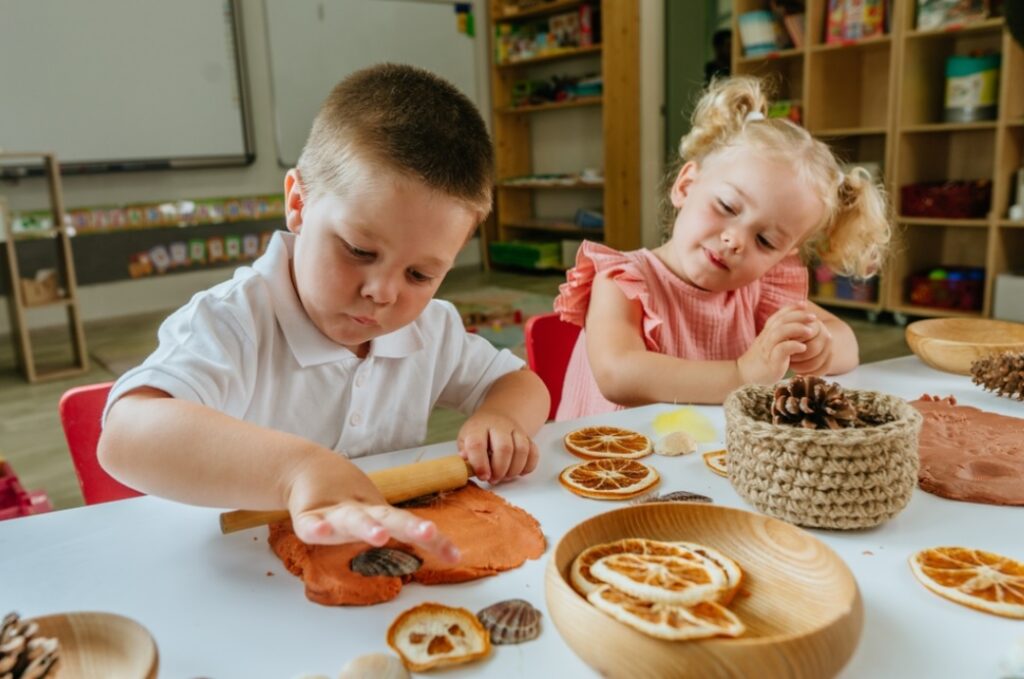
If you want to change things up, ditch the plastic toys and cookie cutters. Instead, head into the backyard and grab a few pinecones, gum leaves, bark, or seed pods.
Stamping these natural textures into the dough is a fantastic, low-key way to introduce outdoor elements. For more inspiration, check out our list of 35 nature play ideas or read more on why nature-based play is great for children in early education.
The Tribe Approach
At Tribe, our philosophy isn’t about sitting still at desks or memorising flashcards. Real early education is driven by curiosity and hands-on discovery. A simple batch of kitchen playdough hits those national EYLF learning outcomes perfectly, no worksheets required. You can learn more about how we bring these frameworks to life through our inquiry-based pedagogy.